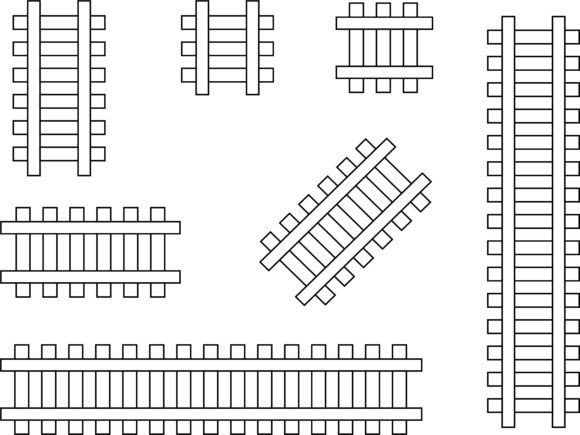
Evaluating the Railway Railroad Train Tracks Collection: A Comprehensive Guide for Designers and Hobbyists
For digital artists, craft enthusiasts, and transportation historians, finding high-quality visual assets that accurately represent railway infrastructure can be surprisingly difficult. The Railway Railroad Train Tracks Collection emerges as a specialized resource designed to bridge this gap. This curated set offers a diverse array of track designs, ranging from classic steam-era layouts to modern industrial rail systems. However, before integrating these assets into your workflow, it is essential to understand what this collection entails, how it compares to generic stock imagery, and whether its specific file formats align with your project requirements.
This article provides a practical evaluation of the collection, focusing on its technical specifications, design versatility, and ideal use cases. By examining the included files—28 PNGs, 28 SVGs, 4 EPS files, 1 AI file, and 4 JPGs—we can determine if this resource offers the flexibility and quality needed for professional and personal projects alike.
Understanding the Composition and Technical Specifications
The value of any digital asset pack lies not just in the aesthetic appeal of the images, but in their technical utility. The Railway Railroad Train Tracks Collection is structured to accommodate a wide range of software preferences and output needs. Understanding the distinction between the provided formats is crucial for maximizing the utility of the purchase.
- PNG Files (300dpi): The collection includes 28 PNG files at 300 dots per inch. This resolution is the industry standard for high-quality printing. These files are raster images, meaning they are composed of pixels. They are ideal for users who need ready-to-use images for print-on-demand products, scrapbooking, or digital collages where layering transparent backgrounds is necessary. The 300dpi ensures that edges remain crisp when printed at moderate sizes.
- SVG Files: With 28 SVG (Scalable Vector Graphics) files included, this collection caters specifically to users of cutting machines like Cricut or Silhouette, as well as web designers. SVGs are vector-based, allowing them to be scaled to any size without losing quality. This makes them perfect for creating large-scale decals, vinyl stickers, or responsive web icons.
- EPS and AI Files: The inclusion of 4 EPS files and 1 master AI (Adobe Illustrator) file indicates a focus on professional graphic design workflows. These vector formats allow for deep editing. If you need to modify the curvature of a track, change the color of the ties, or isolate specific elements of a complex junction, these files provide the necessary editable paths. The single AI file containing all designs serves as a centralized library for designers who prefer working within the Adobe ecosystem.
- JPG Files: The 4 JPG files offer a lightweight alternative for quick previews or web usage where transparency is not required. While less versatile than PNGs or vectors, they are useful for rapid prototyping or social media posts where file size matters more than editable layers.
Comparing Specialized Collections vs. Generic Stock Assets
When sourcing railway imagery, creators often face a choice between specialized collections like this one and broad, generic stock photography libraries. Each approach has distinct tradeoffs regarding authenticity, editability, and consistency.
Generic stock libraries typically offer photographic realism. If your project requires a photorealistic depiction of a specific train model on a real-world track, a high-resolution photograph might be superior. However, photographs come with significant limitations. They often have complex, difficult-to-remove backgrounds, inconsistent lighting, and perspective distortions that make them hard to integrate into flat designs or illustrations. Furthermore, mixing multiple stock photos can result in a visually disjointed final product due to varying color grades and resolutions.
In contrast, the Railway Railroad Train Tracks Collection offers stylized consistency. Because the assets are likely illustrations or digitally rendered vectors, they share a cohesive visual language. This uniformity is vital for branding, pattern design, or educational materials where clarity trumps photorealism. The ability to manipulate colors and shapes in the vector files (SVG, EPS, AI) provides a level of creative control that static photographs cannot match. For example, if you are designing a logo for a logistics company, you can easily adjust the track colors to match corporate branding—a task that would require extensive photo manipulation if using stock images.
Assessing Design Versatility and Use Cases
The true test of any asset collection is its applicability across different projects. The diversity of formats in this collection suggests it is designed for multi-platform use. Here are several scenarios where this collection proves particularly effective:
Print-on-Demand and Merchandise
For entrepreneurs selling niche merchandise, the 300dpi PNGs are invaluable. Railway enthusiasts often seek out specific details, such as vintage switch tracks or industrial sidings, which are rarely found in mainstream design stores. These high-resolution transparent images can be directly applied to t-shirts, mugs, and posters. The clarity of the lines ensures that the intricate details of the tracks remain visible even on smaller items like keychains or stickers.
Digital Scrapbooking and Card Making
Hobbyists involved in digital scrapbooking benefit from the layered nature of PNGs. The transparent backgrounds allow for easy composition over textured papers or other elements. The variety of track types—straight, curved, crossed—enables the creation of realistic layouts for themed albums, particularly those documenting family travel histories or historical research projects.
Professional Graphic Design and Branding
Graphic designers working on logos, brochures, or infographics for transportation sectors will find the vector files indispensable. The EPS and AI files allow for precise alignment and scaling. For instance, a designer creating an infographic about supply chain logistics can use the track elements to create custom flowcharts that visually represent movement and connectivity. The ability to edit anchor points in Illustrator ensures that the tracks can be bent or extended to fit specific layout constraints without pixelation.
Web and App Interface Design
The SVG files are optimized for digital interfaces. They load quickly and remain sharp on retina displays. Developers can use these icons to represent navigation, progress bars, or location markers in transportation-related apps. The scalability of SVGs means a single file can serve as a small favicon and a large hero image, reducing the need for multiple asset versions.
Limitations and Considerations for Buyers
While the Railway Railroad Train Tracks Collection offers robust features, it is not a one-size-fits-all solution. Potential buyers should consider certain limitations before purchasing.
First, the stylized nature of the assets may not suit projects requiring strict historical accuracy or photorealism. If you are creating a documentary-style presentation or a hyper-realistic simulation game, these illustrative tracks may appear too abstract. In such cases, 3D models or high-fidelity photographs would be more appropriate.
Second, the learning curve for vector files should not be underestimated. While PNGs and JPGs are plug-and-play, utilizing the full potential of the SVG, EPS, and AI files requires proficiency in software like Adobe Illustrator, Inkscape, or CorelDRAW. Users unfamiliar with vector editing may find themselves limited to the pre-rendered PNGs, thereby underutilizing a significant portion of the collection. It is advisable to assess your technical comfort level with vector graphics before prioritizing this aspect of the package.
Finally, consider the scope of the collection. With 28 unique designs, the variety is substantial but not exhaustive. If your project requires a vast array of highly specific railway components—such as particular signal types, rolling stock, or station architecture—you may need to supplement this collection with additional resources. This pack focuses primarily on the tracks themselves, which is a strength for focused designs but a limitation for comprehensive scene building.
Making the Right Choice for Your Project
Deciding whether the Railway Railroad Train Tracks Collection is the right investment depends on your specific goals and technical capabilities. If you prioritize consistency, editability, and ease of integration into both print and digital media, this collection offers a compelling value proposition. The inclusion of multiple file formats ensures that whether you are a casual crafter using a cutting machine or a professional designer working in Illustrator, there is a format suited to your workflow.
However, if your primary need is photorealistic imagery or if you lack the software skills to edit vector files, you may find greater utility in specialized stock photography subscriptions or simpler clip-art bundles. Evaluate your project's aesthetic requirements and your own technical comfort zone. For those seeking a balanced, versatile, and professionally formatted set of railway assets, this collection stands as a strong candidate in the market.
Ultimately, the decision rests on how well the asset's style aligns with your creative vision. By understanding the strengths of the provided formats and recognizing the tradeoffs between illustration and photography, you can make an informed choice that enhances your design process rather than complicating it.