Mastering the UI Kit Button Search and Forms for Efficient Web Design
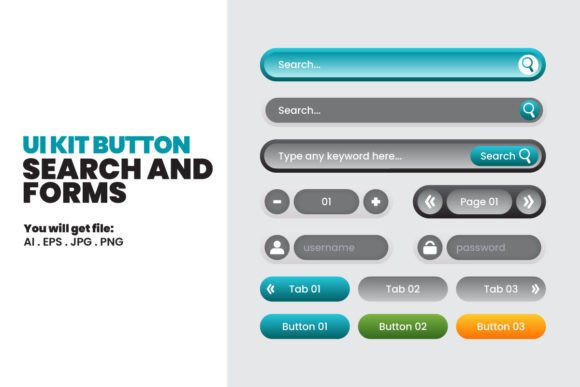
In the fast-paced world of digital product development, consistency is not just a aesthetic preference; it is a functional necessity. Whether you are building a complex e-commerce platform or a simple landing page, the user interface elements you choose define how visitors interact with your brand. This is where a comprehensive UI Kit Button Search and Forms collection becomes an invaluable asset. However, many designers and entrepreneurs make critical errors when selecting and implementing these resources, often leading to wasted time, inconsistent branding, and poor user experiences. Understanding how to properly evaluate, edit, and deploy these design assets can significantly elevate the quality of your final product.
The Hidden Value of Pre-Designed Interface Elements
A UI kit is more than just a folder of pretty pictures. It is a structured library of reusable components that ensures visual harmony across your application. When you download a package containing buttons, search bars, and form fields, you are acquiring a foundational system. The primary advantage lies in efficiency. Instead of drawing every input field from scratch, you have a ready-to-use template that adheres to modern design standards. This allows creators, from freelance developers to marketing teams, to focus on functionality and content rather than reinventing the wheel for every pixel.
Yet, a common misunderstanding is assuming that "ready to use" means "plug and play" without any customization. While these kits are designed for ease, treating them as rigid, unchangeable blocks is a mistake. The true power of a high-quality kit, such as one provided in Adobe Illustrator format, lies in its editability. You must view these files as a starting point, not the finish line.
Common Pitfalls in Selection and Implementation
One of the most frequent errors designers make is overlooking file compatibility and versatility. You might find a stunning kit, but if it is locked in a proprietary format that your team cannot easily access, it becomes a bottleneck. For instance, relying solely on raster images like JPGs for interface elements is a significant oversight. While a High Resolution JPG File is excellent for previews or mockups, it is terrible for actual development. Raster images do not scale well, leading to pixelation on high-density screens, and they cannot be easily manipulated for different states (hover, active, disabled).
Another critical mistake is ignoring the importance of vector formats. A professional workflow requires assets that can be scaled infinitely without loss of quality. This is why ensuring your download includes an EPS file or an Adobe Illustrator source file is non-negotiable. These formats allow you to adjust stroke widths, change colors to match your brand palette, and resize elements for mobile or desktop views seamlessly. Furthermore, the ability to open and edit these files using Corel Draw expands your collaborative potential, ensuring that team members using different software suites can still contribute effectively.
The Trap of Ignoring Transparency and Layering
Beginners often underestimate the utility of Transparent PNG files. In web design, you frequently need to overlay interface elements on various backgrounds. If your button or search bar has a white background baked into the image, it will look disjointed on any colored section of your website. Transparent PNGs solve this by allowing the element to blend naturally with the underlying design. Failing to utilize these assets results in a amateurish "cut-and-paste" appearance that undermines user trust.
Additionally, many users download these kits and fail to organize their layers. An elegant minimal design is only useful if it is structured logically. If the AI file is a mess of unlocked groups and unnamed layers, editing becomes a frustrating chore. Always take a moment to inspect the file structure upon opening. A well-made kit will have clearly labeled layers for "Button," "Input Field," "Icon," and "State." If the kit lacks this organization, consider it a red flag regarding the designer’s attention to detail.
Ensuring Quality and Usability Before You Commit
Before integrating any UI component into your project, you must verify its technical specifications. Does the kit offer enough variety? A robust UI Kit Button Search and Forms package should include multiple states for interactive elements. For example, a button should have designs for its default state, hover state, click state, and disabled state. Without these variations, your developers will have to guess how the element should behave, leading to inconsistent interactions.
It is also vital to check the resolution and grid alignment. Even in vector files, ensure that the elements align to a standard grid system. Misaligned padding or inconsistent border radii between the search bar and the submit button can create subtle visual tension that makes the interface feel "off." Use the tools in Adobe Illustrator or Corel Draw to measure distances and ensure uniformity. This level of scrutiny separates professional-grade interfaces from amateur attempts.
Best Practices for Editing and Customization
To get the most out of your download, adopt a systematic approach to customization. Start by defining your brand’s color palette and typography. Then, use the global color swatches in your Illustrator file to update all elements at once. This ensures that if you decide to tweak your primary blue later, every button and form border updates automatically. This method saves hours of manual adjustment and prevents human error.
When editing forms, pay close attention to accessibility. Ensure that the contrast between the text and the background meets WCAG standards. Many minimalist designs sacrifice readability for aesthetics. As the editor, it is your responsibility to balance elegance with usability. Adjust font sizes and weights within the AI file to ensure that labels and placeholder text are legible for all users, including those with visual impairments.
Understanding Licensing and Digital Rights
A crucial aspect often overlooked is the legal framework surrounding digital assets. It is imperative to remember that this is a DIGITAL download and NO physical items will be shipped. More importantly, the ACTUAL FILES may NOT be shared or resold in any form. This restriction protects the intellectual property of the creator and maintains the value of the resource. Sharing the source files with unauthorized parties or including them in a template you sell is a violation of standard licensing agreements.
Respecting these terms ensures that designers continue to produce high-quality, affordable resources for the community. Always read the specific license included with your download. Most personal and commercial use licenses allow you to use the elements in end-products (like websites or apps) but prohibit the redistribution of the raw design files themselves. Keeping this distinction clear protects your business from legal complications.
Final Thoughts on Elevating Your Design Workflow
Integrating a well-curated UI Kit Button Search and Forms into your workflow is a strategic move toward professionalism and efficiency. By avoiding common pitfalls such as ignoring vector formats, neglecting transparency, and failing to customize for accessibility, you ensure that your final product is both beautiful and functional. Remember to leverage the flexibility of Adobe Illustrator and Corel Draw to tailor these elements to your unique brand identity. With the right approach, these digital assets become more than just downloads; they become the building blocks of a superior user experience.
Thank You For Downloading. By choosing quality resources and applying them with care, you invest in the long-term success of your digital projects.